
Meditation for Sunday, November 15
The "Parable of the talents" : Matthew 25:14–15, 19–21
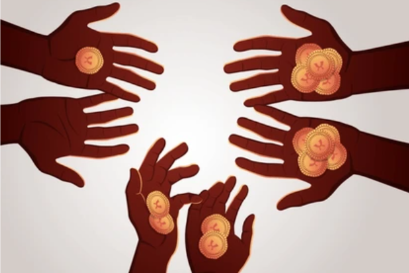
A man going on a journey entrusts his possessions to three servants. The first receives 5 talents, the second 2, and the third 1 (which corresponds to a weight of 30 to 50 kg of gold or silver, a substantial sum). to each according to their abilitiesprotection caps (if present). A long time afterwards he returns and settles accounts with his servants. The first two present to their master the talents they earned from those entrusted to them: even though they do not have the same amount, each has doubled their capital! They receive the same compliment and the same reward. What matters, then, is not the amount of money earned, but the fact that they took the initiative to make the case these talents. The doubling of the amount gives the impression of the full development of the talents received; let us understand them as graces and gifts bestowed freely, and received with gratitude and responsibility. If the servants are declared Vouchers is that they showed love and self-sacrifice, as the following parable from Matthew 25:31–46 illustrates. They wanted to give back for free what they knew they had received as a gift. They committed themselves fully: they are trustedprotection caps (if present).
The third servant does not present any talent gained, but rather words of reproach, positioning himself as a judge of his master and as a victim, ultimately returning the talent entrusted to him. He states: I knew you were a tough guy … How can he be so sure that he knows him? Furthermore, this servant is not aware of God's gifts: You reap where you did not sow… He views God as an exploitative tyrant. So he was afraid to the point of being paralyzed and burying the talent he had received, that is, his life. The master in the parable then presents himself as his servant fears him to be and shows him his inconsistency: he should have to deposit one's money in the bank to satisfy the demands of such a master. That is to say, perhaps, to seek help so that his life is not lost and endured. For here he is not worthy of the god he has created for himself! He therefore receives the punishment he deserves.
As a reader, I am shocked by this ending! But this is one of the purposes of the parable: an awakening leading to conversion. That is to say, a profound change in two directions: my way of thinking and, consequently, my practical behavior. So, what is the image I have of God, because my actions will depend on it. Does my idea of God paralyze me or encourage me to act, to reach out to others, to make my life a gift? And first of all: Am I aware of the trust that God places in me, of the gifts He bestows upon me? Do I know how to recognize and name them? Am I grateful to Him for them? Do I have a living relationship with Him? And, above all, do I believe in His love in the concrete reality of my life, in the way I react to events, whether good or bad?
Sister M. Armelle, Cistercian of Rieunette
Share Post: